
Still Arguing About the Garage Door? Here's What Another Season Costs
Here's the number to end the debate: a garage door with visible daylight gaps or worn-out seals can let in enough hot, humid air to push your AC's runtime up noticeably every day it's ignored. Nationally, homeowners with poorly sealed garages report cooling-cost increases in the range of 10-20% for the rooms closest to the garage wall, and that's before counting the cost of humidity damage to anything stored out there. In a South Florida house where the garage shares a wall with a bedroom, laundry room, or converted living space, that's not a minor leak. It's a second thermostat you can't control, and it runs all year because this climate doesn't really give the AC a break.
Why the Garage Door Affects the Whole House
An attached garage isn't sealed off from the rest of the home the way most people assume. Air moves through the shared wall, through the door connecting the garage to the house, and through any ductwork or electrical penetrations that pass through that space. When the garage itself sits 15-20 degrees hotter than the house because hot, humid outside air is leaking in around the door, that heat load transfers inward. Your AC senses the rising temperature near that shared wall and runs longer to compensate, even though the thermostat is nowhere near the garage.
The leak points are almost always the same three spots: the weatherstripping along the bottom edge, the stop molding on the sides and top where the door meets the frame, and the seams between panels on older or storm-damaged doors. Any one of these, left alone, becomes a steady intake for hot air and moisture.
The Symptoms That Settle the Debate
- Visible daylight around the edges of the closed door, especially at the corners
- A warm, humid blast of air near the door into the house, even with the AC running
- Musty or mildew smell in the garage, especially after an afternoon downpour
- Condensation on garage walls or on boxes stored against the shared wall
- AC short-cycling or running longer than it used to without an obvious cause
- A creeping increase in the electric bill that doesn't match your usage habits
A Quick Test You Can Do Tonight
Close the garage door, turn off the lights inside, and have someone stand outside with a flashlight while you look for light leaking in around the edges. Any gap you can see light through is a gap air is moving through too. For the bottom seal, slide a dollar bill under the door and close it — if you can pull the bill out without resistance, the seal isn't doing its job.
What Actually Fixes It (and the Trade-offs)
Not every leak needs the same fix, and it's worth knowing the difference before you spend money on the wrong one.
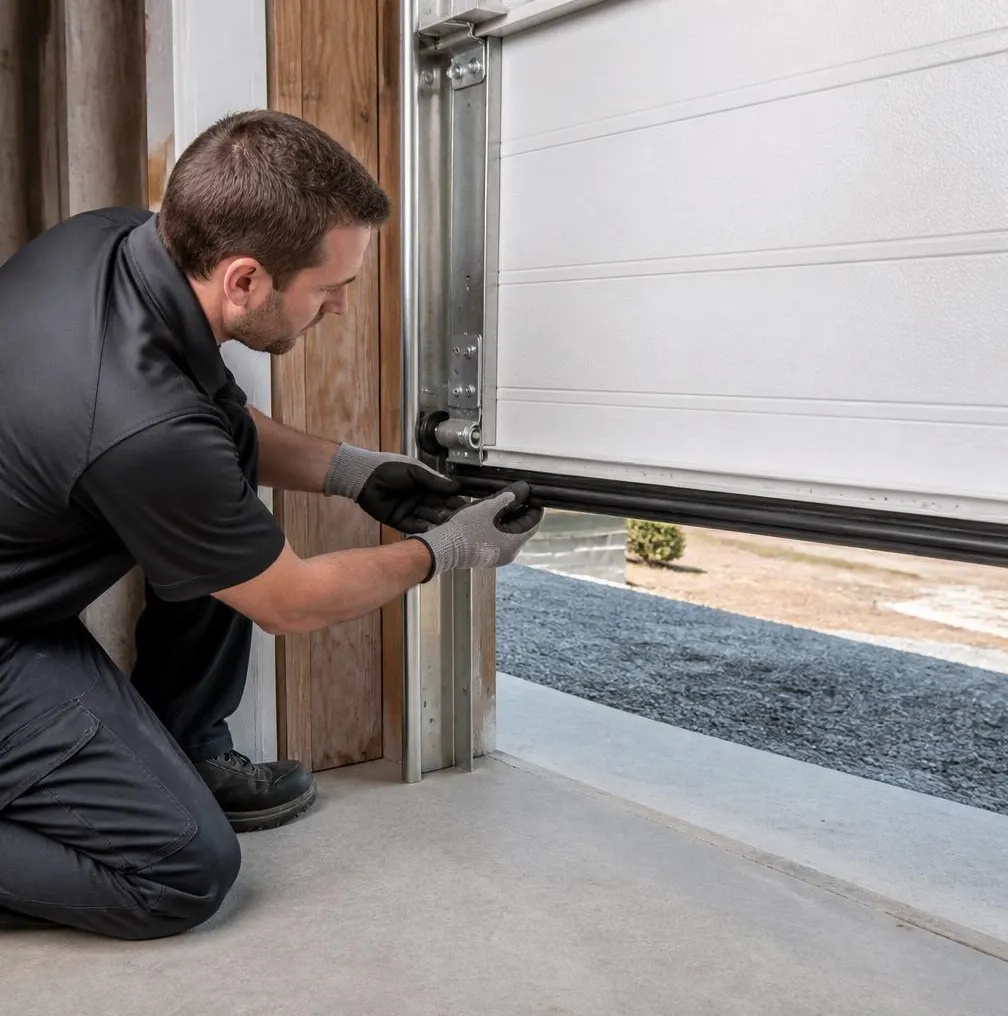
- Weatherstripping replacement is cheap and often DIY-friendly, but in this climate the rubber breaks down faster from UV exposure and heat, so expect to redo it more often than a cooler climate homeowner would.
- Bottom astragal seal replacement targets the gap most responsible for water and pest intrusion, not just air leaks, and is worth doing anytime you notice standing water or debris getting under the door after a storm.
- Insulated panel retrofit kits improve the door's R-value but don't fix air leaks on their own — pair them with new weatherstripping or they won't deliver the savings you're expecting.
- Full door replacement with an insulated, wind-rated door is the bigger investment, but it solves the air-leak problem and brings the door up to current wind-load standards at the same time, which matters heading into another hurricane season.
A Climate Problem, Not Just a Weather Stripping Problem
Humidity swings here cause wood and composite doors to swell and shrink with the seasons, which opens gaps that weren't there when the door was installed. Near the coast, salt air corrodes hinges, rollers, and the hardware that keeps weatherstripping pressed tight against the frame, so seals that look fine can still be letting air through because the door isn't closing with even pressure anymore. And those afternoon downpours don't just test the seals — they push moist air into the garage that lingers, raising humidity levels that make the AC's job even harder and put stored belongings at risk for mildew.
When to Call Precision Garage Door of Greenacres
If you've done the flashlight and dollar-bill tests and found gaps, or if your door is warped, rusted, or just older than your last two AC units, it's time for a second opinion. Precision Garage Door of Greenacres offers a full Garage Door Tune-Up & Maintenance visit that checks seals, panel alignment, and hardware condition, and tells you honestly whether a repair will solve it or whether the door's age and condition make Garage Door Installation & Replacement the smarter long-term move. Either way, you get a straight answer instead of a guess.
Stop guessing and settle it for good. Call Precision Garage Door of Greenacres today to schedule an inspection and find out exactly what that gap is costing you every month.